Security training in the daily workflow with Darktrace

Key takeaways
- Employees in SMEs are increasingly exposed to sophisticated, AI-driven attacks.
- Security training needs to be precisely tailored to individual employee behavior.
- WithDarktrace/Adaptive Human Defense provides Baggenstos with a solution that strengthens security awareness on an individual level.
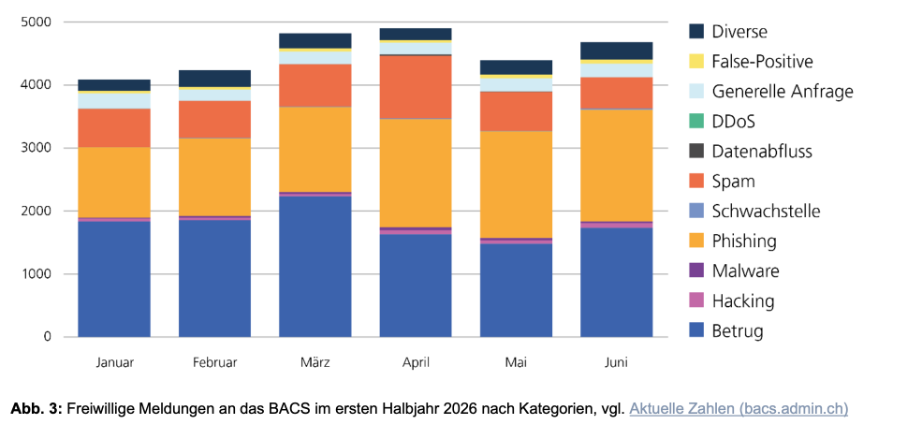
Malicious messages are increasingly appearing to come from "colleagues" or "friends." The latest semi-annual report from the Federal Office for Cybersecurity (BACS) states clearly: "The individualization and use of artificial intelligence (AI) in cyberattacks, already mentioned in the last report, continue to advance." Attackers are systematically using AI "to convey tailored, personalized content in a credible way."
In other words: It is becoming increasingly difficult to identify incoming messages aimed at stealing personal data to spoof identities and gain unauthorized access to systems.
"Employees should not be labeled as the weak link here", says Eckhard Neuhaus, CTO at Baggenstos. "They are facing increasingly sophisticated attacks and often have to make decisions under time pressure. That is why they need targeted support and awareness rather than blame." The innovative solution from Darktrace combines intelligent security technology with continuous, practical awareness training: Technical protective mechanisms detect suspicious patterns and fend off attacks as early as possible. At the same time, employees learn to identify risks faster and respond correctly during their daily work. This transforms them from potential targets into an active line of defense.
Attack methods and potential protective measures
Statistics from the Federal Office for Cybersecurity (BACS) highlight the current attack methods against which employees must protect themselves through vigilance and correct behavior.
Fraud
Faked voices, images, videos, or meetings, fake offers, fraudulent e-shops and companies, as well as fabricated relationships or emotions.
Protective measures:
- Verify unusual requests for money, unexpected feedback, or urgent tasks via a second communication channel.
- Do not rely on phone numbers, voices, images, video conferences, or videos as proof of identity.
- Consistently apply the four-eyes principle for critical processes, such as transactions, account details, or contracts.
- Report suspicious contacts immediately.
- Do not respond to unexpected contact via social media.
Initial access
Initial access often occurs via malware sent by email, "ClickFix" prompts for updates or repairs, multi-stage attacks involving emails and fake support calls, compromised open-source software, or hijacked legitimate accounts, such as in Microsoft 365.
Protective measures:
- Do not execute unexpected attachments, links, commands, or software updates.
- Only install programs and updates from approved sources.
- Decline requests to copy and paste commands or keyboard shortcuts.
- Do not enable macros.
- Report suspicious messages; do not forward them.
- Verify unusual emails with the sender via a second communication channel.
Phishing
Phishing now appears in many forms: as fake emails from well-known brands, TWINT fraud, double phishing involving fake parcel pickups, callback scams, alleged SharePoint links with intercepted session tokens, device code phishing, or via reverse proxies.
Protective measures:
- Check the sender address, domain, and link destination.
- Only open login pages via bookmarks or the known website.
- Do not share login codes, passwords, or session approvals.
- Verify unexpected SharePoint, package, or TWINT messages via a second channel.
- If you suspect an issue, change your password, terminate active sessions, and report the incident.
Ransomware and data extortion
Ransomware attacks often begin with phishing, malicious attachments, stolen credentials, unpatched security vulnerabilities, brute-force attacks on remote access, compromised software updates, or social engineering. This is frequently followed by the takeover of privileged accounts, lateral movement within the network, data exfiltration, file encryption, the deletion of backups, and double extortion through the publication of stolen data, DDoS threats, or contact with customers and business partners.
Protective measures:
- Do not open unknown files, archives, or programs.
- Do not bypass warnings from your browser or security software.
- Save files only in shared repositories so that backups are available.
- If you encounter unusual file names, locked documents, or extortion messages, disconnect from the network immediately.
- Leave the device turned on and contact your internal reporting department.
Adaptive training in everyday work
The challenge is significant for employees who, in addition to their digital work, must also recognize attempted attacks and keep pace with the technical advancements of cybercrime. However, this also means:
"Mandatory training using a one-size-fits-all approach is no longer enough," says Eckhard Neuhaus. "Effective security education must be tailored to the individual, their role, and their specific risk profile."
With the new "Adaptive Human Defense" feature from Darktrace, Baggenstos customers now have access to a solution that acts like a digital security advisor in their daily work. It combines email security with security awareness training. The AI learns the behavior of each individual in their inbox and provides brief, relevant tips exactly when a risk arises. This happens directly during the workday, without the need for separate training. Phishing simulations also adapt: the difficulty and content are tailored to the specific person. The results flow back into the email protection mechanisms, continuously improving detection.
"Continuous feedback based on the latest data from security researchers strengthens employee awareness," Neuhaus adds, "but it also improves technical protection, which adapts to the individual risk profile."
Turn your employees into an active line of defense with Darktrace.
Your benefits
Darktrace Adaptive Human Defense strengthens employee security awareness and offers additional benefits:
- Real behavioral change: Employees learn in the moment of risk.
- Personalized training: Learning content is tailored to the individual's role, workflow, and risk profile
- Hybrid security: Training and technical detection reinforce one another – every near-miss strengthens protection
- Less time required: IT and HR spend less time organizing training sessions and can focus on what matters most

You might also be interested in