Three generations on the wall: The story and photos from the site

In the penultimate newsletter from four weeks ago, it was already featured: the distinctive wall above the "Central" in Zurich (Google Maps), which is instantly recognizable from below. And we announced that we would soon be approaching the wall from above, from the street that bears its location in its name: "Auf der Mauer."
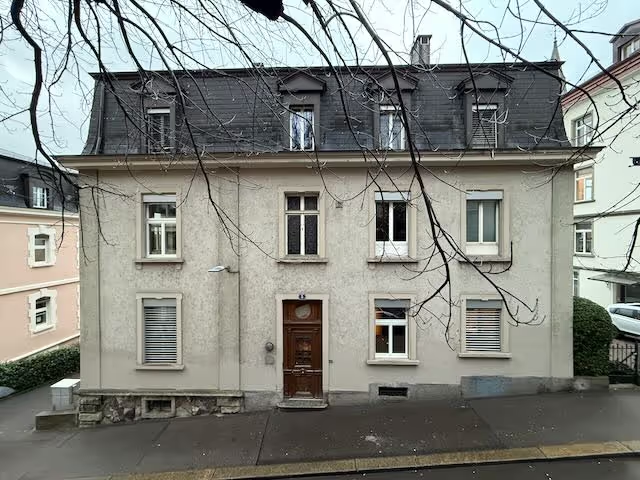
The founding building: Auf der Mauer 5, 8001 Zurich, see also alt-zueri-ch
In the building at number 5, or more precisely, in its basement, August Baggenstos—father of Thomas and grandfather of Moritz—opened a typewriter repair shop in 1925, as mentioned in our overview of our company history . We are celebrating this anniversary throughout the entire year.
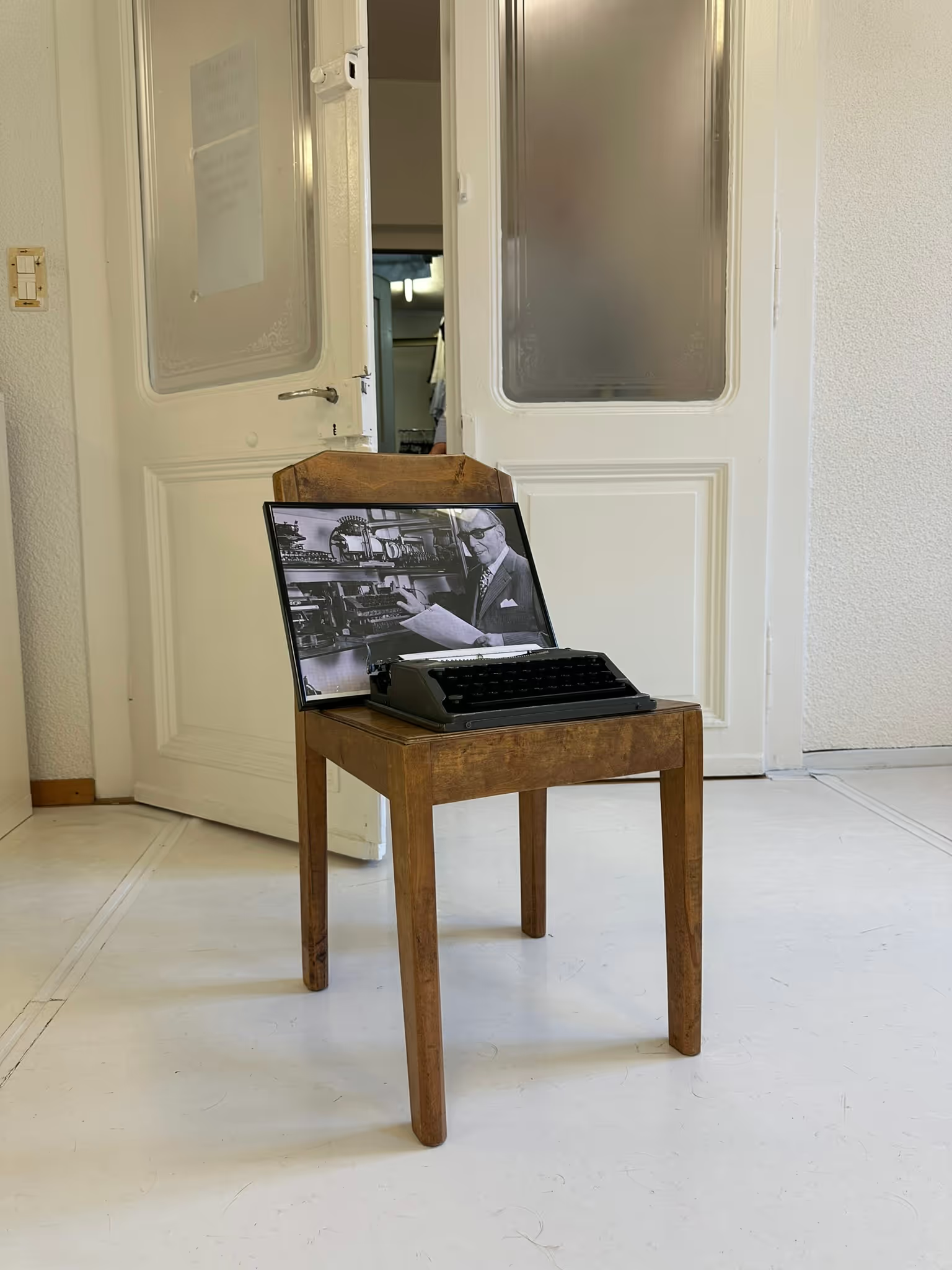
Last week, the two of them were on-site. The current tenant of the space, Ms. Burgdorfer, runs a children's dance theater there and kindly opened her doors to them for a photo session with props.
One detail in the company chronicle only becomes apparent at second glance: the "Hermes" typewriter from the French-Swiss company Paillard, for which the founder had specialized in representation and maintenance, had only been on the market for three years at that time. While typewriters themselves, based on a wide variety of concepts, had existed for several decades, the major breakthrough was yet to come, and this Swiss invention represented what we would call "high-tech" today. Previously, it had by no means been certain that machine-written text, considered soulless, would be able to prevail over the then-artful handwriting.
But our ancestor had backed the right horse. The typewriter conquered offices worldwide. The photos of huge typing pools, in which dozens to hundreds of women typed out texts almost exclusively, are part of the visual cultural heritage of the 1930s and 1940s.
+++
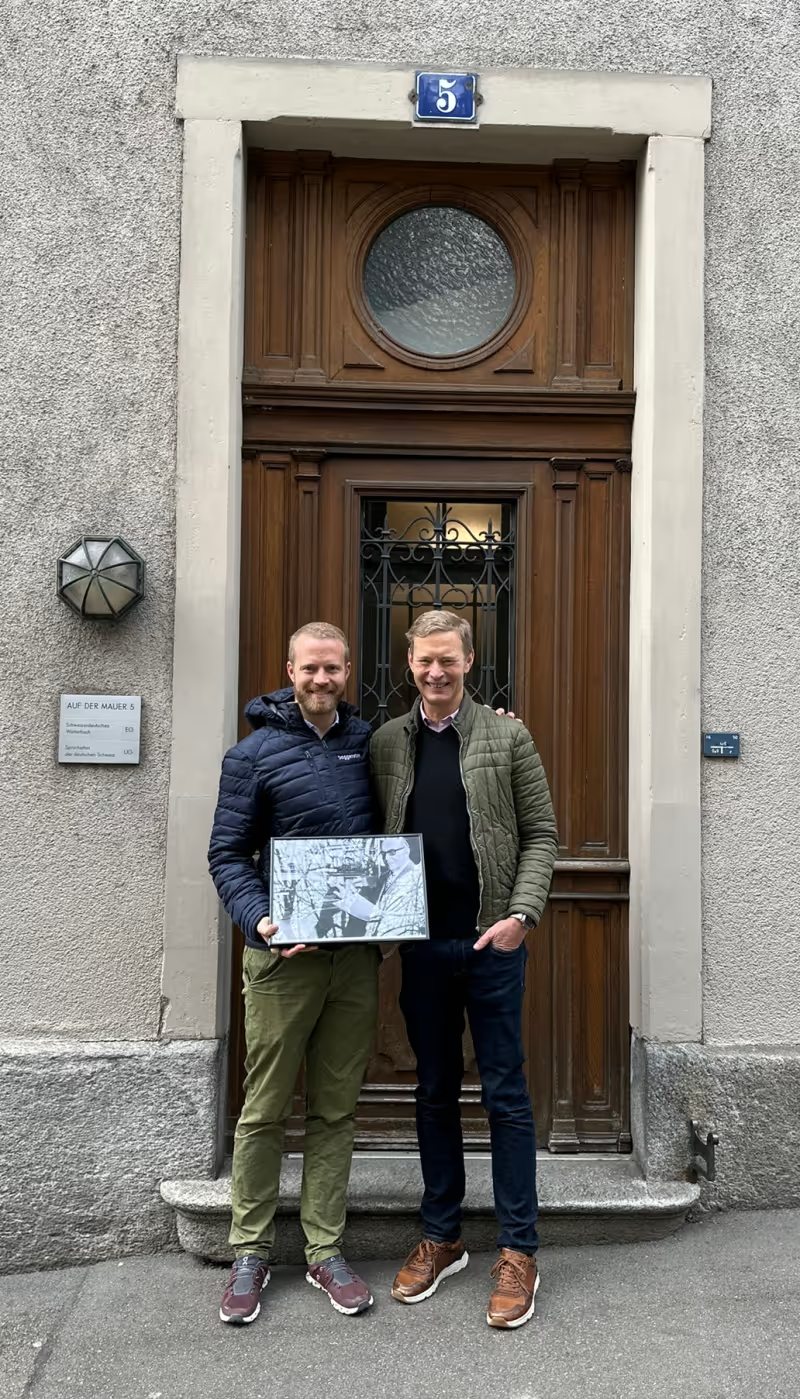
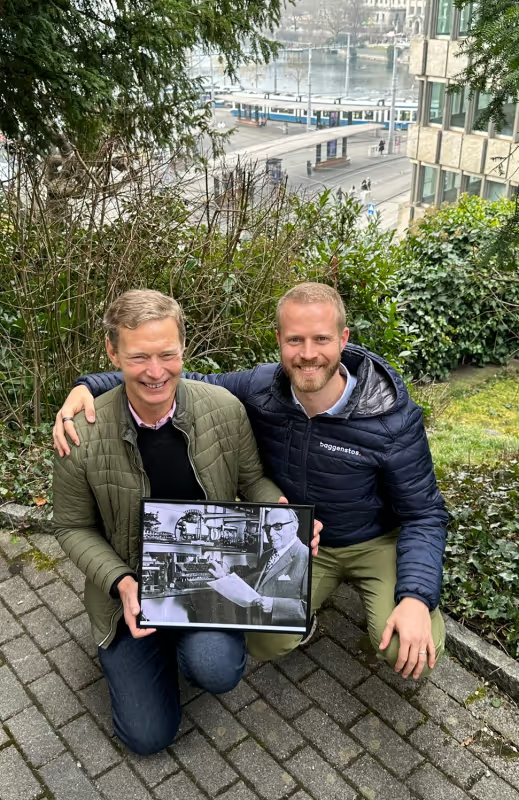
Back to the house Auf der Mauer 5. For the visit, father and son had brought along a few items: first, a framed photo of the company founder, August, to bring three generations of Baggenstos together in one picture.
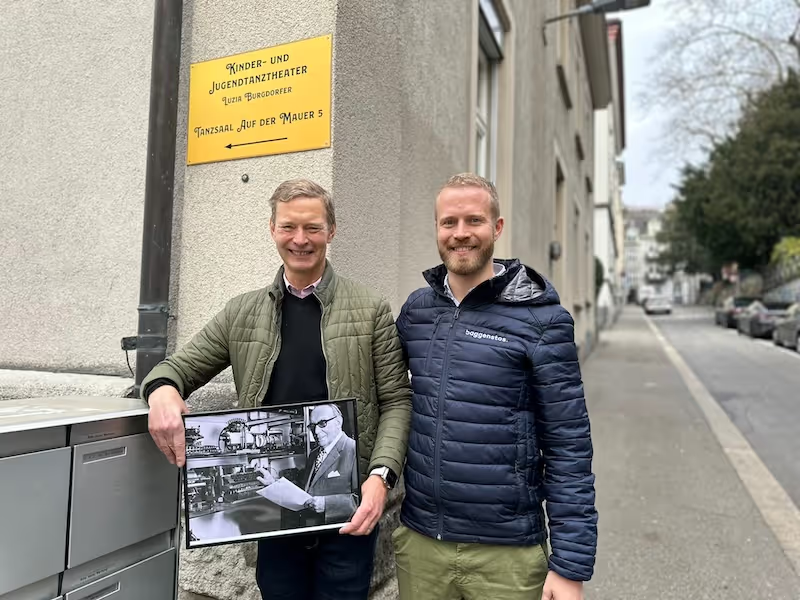
Thomas and Moritz Baggenstos with August in front of the house at Auf der Mauer 5
In addition to the historical photo, they also had three technical devices with them, all characteristic of their time:
First, the mechanical portable typewriter "Hermes Baby", which was actually born ten years after the Baggenstos company and quickly achieved worldwide fame from Switzerland. Writers Ernest Hemingway and John Steinbeck were considered fans, the Austrian writer Friederike Mayröcker even said she was "married to her Hermes Baby," and in Switzerland, Emmi Creola-Maag (better known as Betty Bossi) typed her cooking tips on this machine.
During the first 20 years of the company's history, August Baggenstos sold 80,000 HERMES typewriters – a phenomenal success that likely wouldn't have been possible had the founding not coincided with the office revolution that was just taking off.
+++
Thomas Baggenstos joined the company in 1984, once again during a time of transition, as the PC was just beginning its triumphant advance after typewriters had managed to hold their own for nearly 50 years, albeit with a few upgrades (electric, ball head). And once again, there were skeptics, in this case the typewriter veterans at the company, who claimed the PC was merely a "toy" that could "never be used for proper word processing."
But once again, a Baggenstos was proven right, and the PC revolution swept through every office in successive waves: first as "standalone" units, then networked locally within the office. First offline, then constantly connected to the internet. First as desktops, and now primarily as laptops that are easy to carry around and plug back into peripherals at the office.
Accordingly, in the second photo, Thomas is holding a laptop from hp (formerly Hewlett-Packard) – the manufacturer that Baggenstos has been working with since 1974.
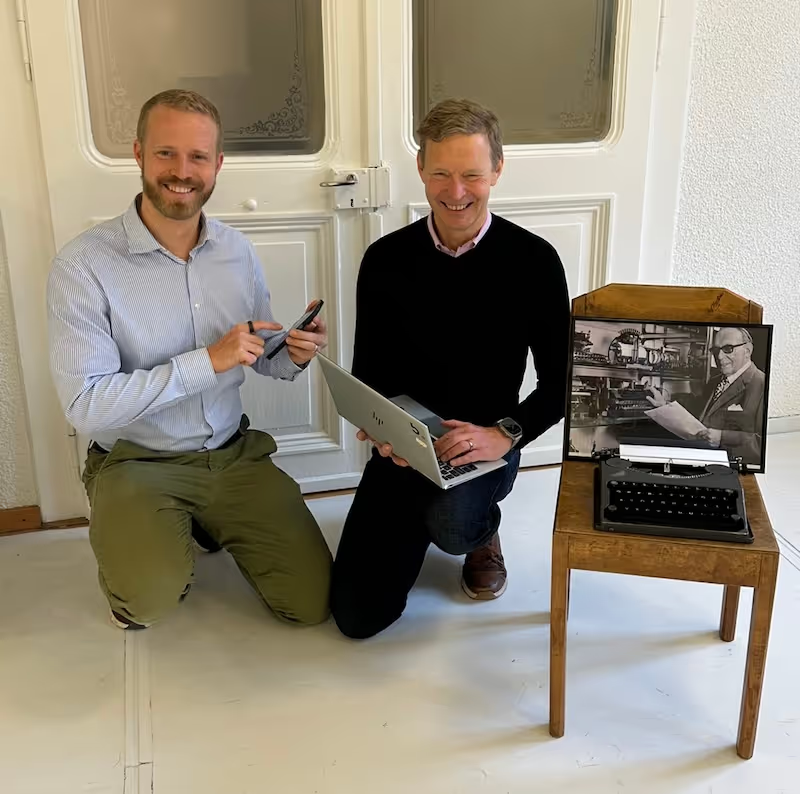
Two sets of three generations at the founding location: Moritz Baggenstos with a smartphone, Thomas with a laptop, and August with a Hermes Baby.
While the PC had certainly changed significantly over 30 years, the way it was used remained essentially the same: a person sits at a desk, looks at a monitor, types on a keyboard, and points and clicks with a mouse. As we all know, the smartphone then swept through the entire IT landscape starting in 2007. Of course, mobile phones existed before then and were used by office workers, but only when they left the office. The only thing they had in common with today's all-purpose mobile devices was the ability to make phone calls.
The mobile laptop still exists, but no one would give up their smartphone just because a laptop can be carried around. Unlike the PC, which gradually spread from the office into private life, the smartphone was primarily a device for personal use that then made its way into the professional world, becoming an indispensable tool in almost every profession today due to its all-around capabilities.
Therefore, when Baggenstos supports its clients primarily "in the cloud" today, devices are always part of the equation, and smartphones are naturally always included in the portfolio – while maintaining high security standards, regardless of whether they are the employees' own devices or provided by the employerIt’s only logical, then, that Moritz is holding his smartphone in the photo—he probably didn't even bring it along just for the photoshoot. ;-)
+++
So, the 1925 founder’s house doesn't just feature three generations of the Baggenstos entrepreneurial family; it also showcases three generations of technical devices, representing three massive technological leaps—all of which A. Baggenstos & Co. AG has kept pace with throughout its history.